
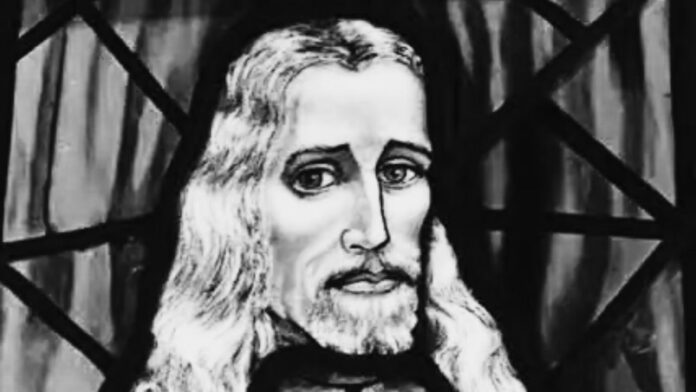
Picture this: a time when religious tension simmered across Ireland, a land of beauty and struggle. It was during this period that Oliver Plunkett burst onto the scene, carving out a legacy that would echo through the ages. You might be wondering, who was this fascinating figure, and why is he so revered in Irish history? Let’s unravel the captivating tale of Oliver Plunkett and his lasting impact on Ireland and the world!
Introduction to Oliver Plunkett
Oliver Plunkett! If the name doesn’t ring a bell, it should! Plunkett was a towering figure in Irish history, remembered for his charisma, courage, and unwavering dedication to his faith during a time when being a Catholic in Ireland was far from easy. Born in 1625 in Loughcrew, County Meath, Ireland, he rose to prominence as the Roman Catholic Archbishop of Armagh and Primate of All Ireland. His zeal and determination marked him as the last victim of the infamous Popish Plot. Plunkett’s execution for high treason at Tyburn, London, on July 1, 1681, marked a poignant period in history. And here’s the exciting part: he was beatified in 1920 and canonized in 1975, becoming the first new Irish saint in almost 700 years! But let’s take a step back and dive into his incredible story.
Early Life and Education
Strap in, because Oliver Plunkett’s early life is nothing short of a grand adventure. Born into a noble family in 1625, young Oliver grew up amid strict Catholic restrictions. Imagine being a child full of dreams in an era where religious freedom was a luxury not many could afford! In 1647, his journey led him to the Irish College in Rome, where he wasn’t just an average student but one of the finest. Can you believe it? By 1654, he was ordained a priest and took on the esteemed role of a theology professor at the College of Propaganda Fide, which was a big deal! While Oliver’s heart yearned to return to Ireland, the Cromwellian conquest (1649-1653) banned public Catholic practice, keeping him in Rome until 1670. It’s like the universe was preparing him for something monumental!
Work in Ireland
Fast forward to 1669, and Oliver Plunkett was appointed the Archbishop of Armagh. March 7, 1670, marked his grand return to Ireland. Imagine the scene: a land renewed with hope as Plunkett began reinstating order within the disorganized church post-Restoration. He didn’t just stop at reforms—oh no, he was a whirlwind of change! Plunkett addressed vices like drunkenness among the clergy, established a Jesuit college in Drogheda, and confirmed around 48,000 Catholics in just four years. Yes, you read that right! His travel was intense, traversing his diocese on foot to rebuild the church in line with the Council of Trent’s decrees. Under his watch, Drogheda became home to Ireland’s first integrated school, welcoming both Catholics and Protestants.
But the silver lining faded, and soon, renewed persecution in the mid-1670s forced him into secrecy. Yet, Plunkett didn’t back down—he continued his pastoral mission underground with the same fervor, a true testament to his resilience!
Challenges and Persecution
The backdrop of Oliver Plunkett’s story was a time of intense religious strife. You’ve probably noticed that history is littered with stories of persecution, and Ireland in Plunkett’s time was no exception. Catholics faced severe restrictions and frequent persecution, turning religious practice into an act of courage and defiance. Even when the tide of toleration seemed favorable, it quickly receded, leaving people like Plunkett to navigate these treacherous times with caution and courage. His ministry was shrouded in secrecy, yet he carried out his duties fearlessly, embodying bravery unlike any other!
Arrest and Trial
Here’s the thing: the Popish Plot hysteria was a chaotic period involving accusations, conspiracies, and religious paranoia sweeping across England and Ireland. On December 6, 1679, Oliver Plunkett was arrested in Dublin for allegedly plotting a French invasion and rebellion. Picture being yanked into a maelstrom of falsehoods and deceit—Plunkett’s trial was moved to London, where the odds were decidedly against him. The charges were fueled by perjured testimonies, and Irish witnesses were notably absent. Despite the stacked deck, Plunkett’s poise was unwavering—even when a jury convicted him of high treason in June 1681 after a swift deliberation of just 15 minutes. In response, he simply uttered, “Deo Gratias,” translating to “Thanks be to God.”
Execution and Legacy
Oliver Plunkett’s execution on July 11, 1681, at Tyburn marked the brutal end of a life steeped in faith and dedication. You see, even in the face of a harrowing death—he was hanged, drawn, and quartered—Plunkett remained dignified, forgiving his persecutors with grace. His martyrdom sparked something extraordinary; he became an enduring figure of resilience and devotion.
Let’s jump ahead in time. Oliver Plunkett wasn’t just left to decay in the annals of history. His legacy was vibrant, leading to his beatification in 1920 and eventually his canonization in 1975. For Ireland, it was a powerful resurgence, with Plunkett becoming the first new Irish saint in nearly 700 years! His story resonated far beyond Ireland’s borders, becoming an emblem of faith, courage, and unity amidst adversity.
Conclusion
So, what does Oliver Plunkett truly represent in the grand tapestry of history? His story is a brilliant mosaic of faith, courage, and tenacity—not just a relic of the past, but a beacon of hope and unity. Plunkett’s life reminds us that amid adversity, one’s spirit can shine brightly, illuminating paths for generations to come. He stood as a resolute figure during tumultuous times, and his canonization as a saint cements his everlasting impact on Irish religious history.
As we reflect on Oliver Plunkett’s legacy, we gather insights into the resilience woven throughout the Irish spirit—one that thrives despite challenges. Want to explore more stories like Plunkett’s? Check out this vibrant resource on dailybusinesswire.co.uk.
And there you have it, the fascinating and inspiring saga of Oliver Plunkett—an enduring Irish legend who continues to captivate hearts worldwide!
If you’re curious, dive into history, and let the stories of remarkable individuals like Oliver Plunkett fuel your imagination and inspire your journey. Who knows what tales you’ll unearth?
Also Read: